
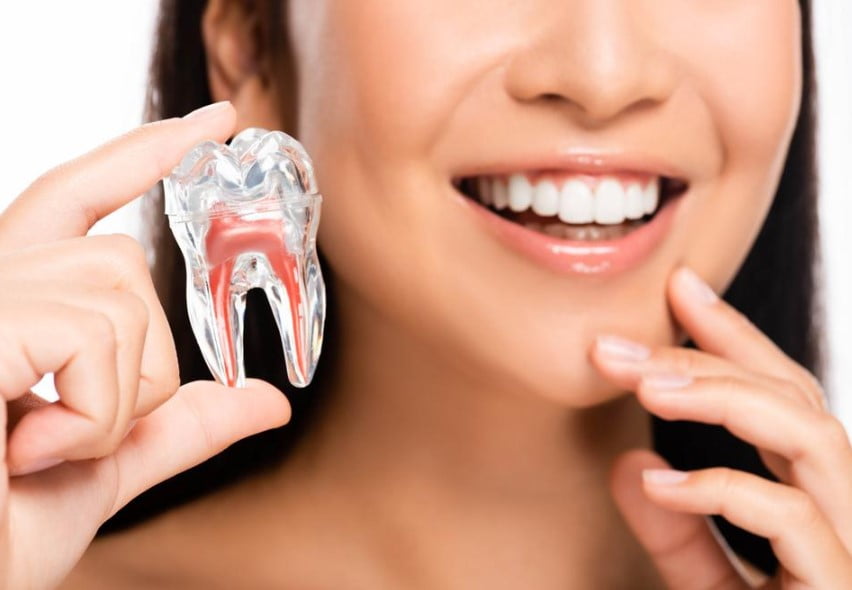
Losing a tooth to an accident or infection is common and nothing to be embarrassed about. As well as affecting the appearance of your smile, a missing tooth can also affect your dental health.
Over time, the loss of a single tooth can lead to bone loss in the jaw and cause the other teeth in your mouth to shift. A single tooth denture is one option for replacing a missing tooth.
This article provides you with the important information you need to know about single tooth dentures.
What Are Single Tooth Dentures?
Single tooth dentures are removable dentures designed to replace a single missing tooth. They consist of an artificial tooth on a gum-coloured base, sometimes with a metal framework that holds the denture in place in the mouth. They are a type of partial denture, as they replace one tooth rather than a full arch of teeth.
Single Tooth Denture Options
There are two main options for a single tooth denture:a partial denture or an overdenture. The option that suits you best depends on your needs and oral health, so discuss both with your dentist before deciding.
Partial Denture
A partial denture is a removable option, and your dentist will assess whether it is suitable for you. A partial denture replaces one or a few missing teeth, not a full arch. Because it is removable, it may feel less stable than a fixed option, which some people find inconvenient.
A removable partial denture usually comprises a metal framework with pink acrylic. To have a partial denture, you need healthy, stable remaining teeth, because the metal framework rests across the upper or lower jaw and hooks onto some of these teeth for support.
One disadvantage of this option is that some patients may be allergic to the metal used in the framework or to the acrylic. Partial dentures can also become loose over time, as they are harder to tighten around the supporting teeth.
Overdentures
Overdentures are also called hybrid or tooth-supported dentures. They are a type of removable denture worn over one or more natural teeth to replace the missing ones.
Overdentures use the existing teeth that are still present as abutments to secure the denture, whereas implant-supported dentures use titanium posts placed in the jawbone to hold the denture in place.
Pros and Cons of Single Tooth Dentures
Like any treatment, single tooth dentures have advantages and disadvantages. It is best to speak with your dentist before deciding which single tooth option to use.
Pros of Single Tooth Dentures
- Partial dentures are generally a lower-cost option than implants or bridges, as only one or a few teeth are replaced.
- Since they are removable, they can be easier to clean than implants.
- A single tooth denture is designed to look natural and blend in with your remaining teeth, although results vary.
Cons of Single Tooth Dentures
- Fees vary; ask us for a written quote.
- Single tooth dentures need regular upkeep. Remove and clean your denture daily as advised by your dentist, and keep up a regular oral hygiene routine for your natural teeth.
Single Tooth Denture Cost Australia
As a general guide only, the cost of a partial denture, which includes a single tooth denture, typically ranges from $700 to $1,400. This does not include additional costs such as tooth extractions, examinations and X-rays, and in some cases the cost of a single tooth denture may be as much as $2,000. Dental implants, which require surgery, generally cost more than partial dentures. Some private health funds with extras cover may contribute towards the cost of dentures; check with your fund. Fees vary; ask us for a written quote.
Single Tooth Denture vs Dental Implant
A single tooth denture and a dental implant both replace a missing tooth, but they are not the same. A dental implant is a fixed, long-term option that is surgically placed into the jawbone, whereas a single tooth denture is removable.
For a dental implant, the dentist surgically places a titanium post into your jawbone to act as an artificial tooth root. Over the following months the bone heals around the post; your dentist then attaches an abutment and, finally, a crown is fitted onto the abutment.
The single tooth denture is different from dental implants. The partial dentures hook onto the remaining teeth, while the base keeps the artificial tooth in place.
What Does A Single Tooth Denture Look Like?
A single tooth denture appears as an artificial tooth connected to a base that is coloured to match the gums, often made from pink plastic or acrylic, sometimes with a metal framework. This structure is designed to support the denture by attaching it to the remaining teeth.
What Are The Alternatives to Single Tooth Dentures?
Alternatives to single tooth dentures include dental bridges and dental implants. A dental bridge is a false tooth held in place by crowns on adjacent teeth. A dental implant involves a titanium post surgically placed into the jawbone, acting as a root for the replacement tooth. Both are fixed options that are generally longer-lasting than dentures, although longevity varies between patients.
Frequently Asked Questions
Can I Have a Denture For One Tooth?
Yes, it is possible to have a denture for just one tooth. These are often referred to as “flippers” and, while not as stable, they can serve as a temporary replacement until a final, laboratory-made replacement tooth is ready.
How Long Does a Single Tooth Denture Last?
Dentures are not a permanent solution and typically last 5 to 10 years, after which even high-quality dentures usually need to be relined or replaced.
Do Dentures Change Your Face?
Yes, dentures can change the appearance of your face. In some cases, they may cause a person to appear older and can lead to facial collapse in some individuals.
What Is The Lowest-Cost Way To Replace A Missing Tooth?
Dentures are generally the lowest-cost option for replacing a missing tooth, because they are quicker to make and do not involve surgery or crowns. Costs vary, so ask your dentist for a written quote.
How Many Teeth Do You Need for a Partial Denture?
A partial denture can replace anywhere from one missing tooth to several. Your dentist will advise whether a partial denture is suitable for your situation.
Conclusion
If you have a missing tooth or teeth, it is worth discussing replacement options with your dentist, as leaving a gap can lead to further problems over time. Consider your budget and your needs, then talk with your dentist about the pros and cons of each single tooth replacement option.
If you are considering a single tooth denture, the dentists atMindarie Quinns Dental Centre can assess your options and discuss which treatment may be suitable for you.